
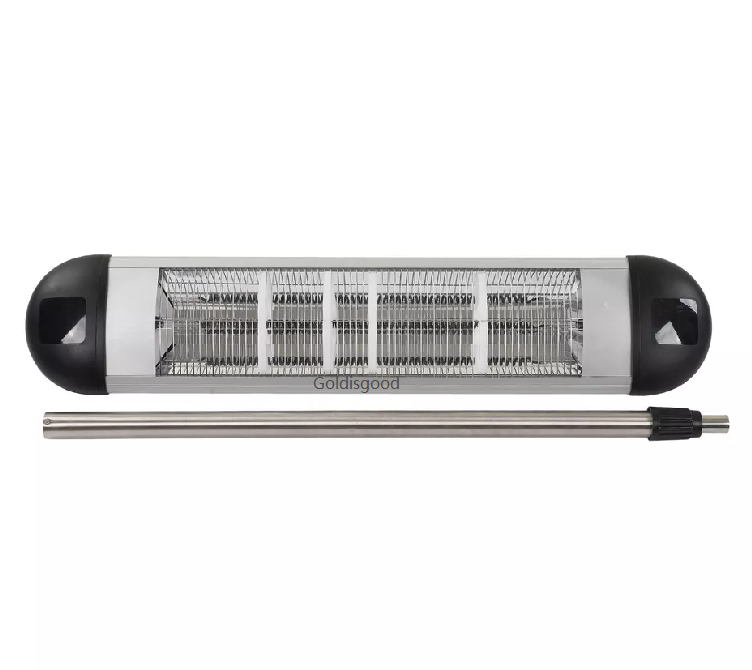
Stop the Glare: Making Bathroom Heaters Actually Comfortable
Most bathroom heat lamps use shortwave infrared to get you warm the second you flip the switch. But there’s a catch: the glare. Ever noticed how some of these lamps feel like staring directly into the sun? It’s harsh. It’s bright. And for babies or toddlers whose eyes are still developing, that kind of intensity is just too much. We figured out a better way to handle this by tweaking how the light actually works. Keeping eyes safe To stop that “blinding” feeling, we shift where the energy goes. We add a special gold or tinted coating to the quartz glass. Think of it like sunglasses for your heater. It blocks out the visible light and the nasty UV rays, but lets the mid-to-far infrared waves slide right through. Those are the waves that actually soak into your skin and make you feel warm. You get all the heat. None of the blinding white light. The nuts and bolts We use high-purity quartz glass because it can handle being turned on and off rapidly without cracking under the pressure. Inside, the tungsten filament is tuned to a very specific temperature so the heat stays safe and steady. We also added a diffused reflector. Instead of the heat hitting you like a laser beam, it spreads out across the room. It feels more like a warm hug and less like a heat lamp at a buffet. A few things to keep in mind Now, here is the trade-off. Adding that protective coating creates a tiny bit of a barrier. You’ll lose about 5-10% of the thermal efficiency compared to a clear, raw tube. It’s a small price to pay for eye safety, but you do need to plan for it. If the room feels a bit chilly, just bump up the wattage. Whatever you do, don’t ditch the filter just to get more heat. One last tip: wire these into their own dedicated circuit. It stops the lamps from flickering when other appliances kick in. And make sure the ceiling housing has plenty of breathing room—if the ballast can’t vent, it’ll burn out.