
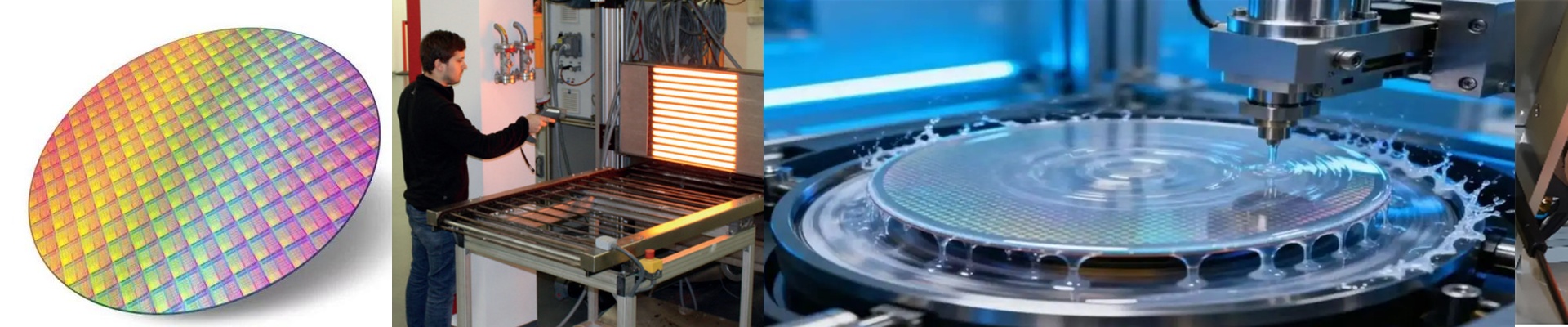
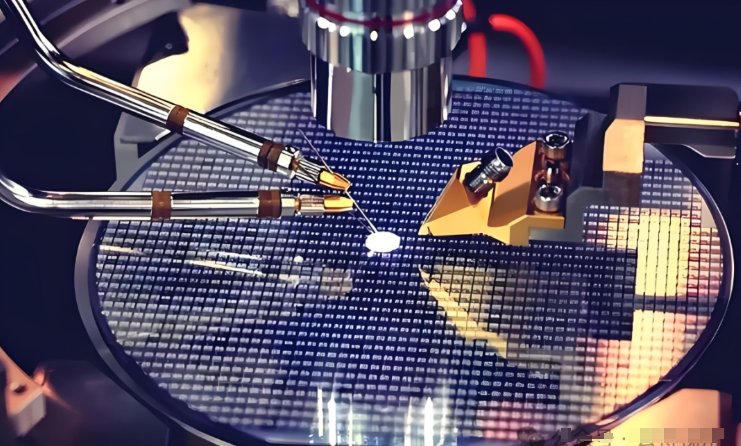
Out on the lithography floor, EUV exposure pushes the thermal budget of every photoresist layer right to the edge. A temperature drift of more than ±0.5°C during soft bake or hard bake is enough to miss critical dimension (CD) targets, print defects, and throw away wafers that already carry hours of front-end process history. Those heater parts feeding the bake steps aren’t accessories. They’re process control nodes, pure and simple. What matters, technically EUV resist heaters have to deliver wafer-level thermal uniformity of ±0.1°C across the resist surface, because line-width control is thermally coupled to the bake profile. We get there by pairing short-wave and medium-wave NIR elements with the photoresist absorption spectrum, while a quartz-halogen design gives stable, fast-response heating with low particulate operation. The system is built for cleanroom Class 1–100, with zero particle generation verified by in-situ monitoring and a sealed hot-zone geometry that keeps outgassing from contaminating the wafer. Repeatability is baked into the control loop: setpoint stability holds up under 24/7 duty, keeping unplanned downtime out of high-mix lot schedules. Why does this work in EUV lithography? Because the bake step sets resist flow, drives out residual solvent, and defines etch selectivity downstream. Tight temperature control translates directly into a tighter CD distribution, fewer rework lots, and predictable overlay. You keep the same process recipe across shifts without constant tuning, and you cut scrap that shows up later as etch bias from thermal non-uniformity. Energy use stays under control, too—the heater architecture targets the resist directly instead of heating the chamber walls. A few practical notes. These heater parts drop into standard resist tracks, but the thermal interface—block flatness and contact pressure—has to meet the specified tolerances. Run a short qualification to verify the temperature profile against your wafer stack, especially with thick resist or new underlayers. Once the interface is dialed in, the unit will run for thousands of cycles with nothing more than routine preventive checks.
在光刻车间,EUV曝光将每层光刻胶的热预算推到了极限。软烘或硬烘过程中温度漂移超过±0.5°C,就足以导致关键尺寸(CD)偏差、印刷缺陷,以及废弃已积累数小时前端工艺历史的晶圆。参与烘烤步骤的加热部件不是附属品,它们是纯粹的工艺控制节点。
技术关键
EUV光刻胶加热器必须实现光刻胶表面晶圆级±0.1°C的热均匀性,因为线宽控制与烘烤曲线热耦合。我们通过将短波和中波近红外(NIR)元件与光刻胶吸收光谱匹配来实现这一点,同时采用石英卤素设计,提供稳定、快速响应的加热,且颗粒物排放低。系统设计符合洁净室Class 1–100标准,通过原位监测验证零颗粒生成,并采用密封的热区结构,防止气体逸出污染晶圆。控制回路内置重复性保障:设定点稳定性可支撑全天候24/7运行,避免高混批生产计划中的非计划停机。
为什么这在EUV光刻中有效?因为烘烤步骤决定了光刻胶流动性,驱散残余溶剂,并定义了后续刻蚀选择性。严格的温度控制直接转化为更精确的CD分布、更少的返工批次和可预测的叠加精度。不同班次间可保持相同工艺配方,无需频繁调整,同时减少因热不均匀导致的刻蚀偏差废品。能耗也得以控制——加热器结构直接针对光刻胶加热,而非加热腔壁。
几点实用建议。这些加热部件可直接安装于标准光刻胶涂布轨道,但热接口——包括加热块平整度和接触压力——必须符合指定公差。建议进行短期验证,确认温度曲线与晶圆叠层匹配,尤其是在光刻胶较厚或采用新底层时。一旦接口调校完成,该装置可连续运行数千个循环,仅需常规预防性维护检查。