

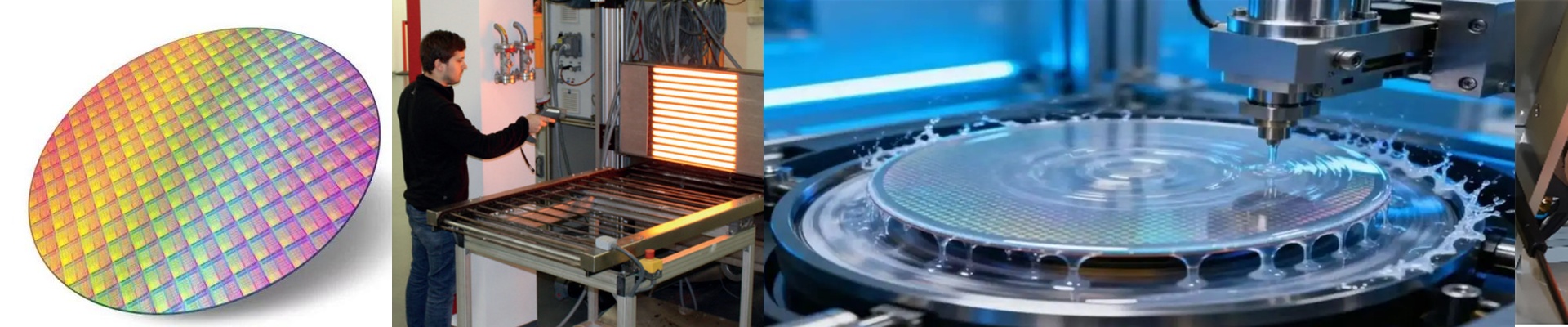

Out on the lithography floor, a 1°C drift during hard bake isn’t a “risk.” It’s a line stop. Critical dimension control falls outside spec, and the lot is stuck. The first thing that decides whether your thermal budget lands clean and consistent is the reflector in the wafer curing lamp. Period. What you actually need is control you can measure. We set the reflector geometry so the lamp spectrum maps onto the wafer plane with wafer-level thermal uniformity of ±0.1°C—directly supporting soft bake and hard bake process windows. Surface finish and material choice keep particulate generation down, so particle counts stay in line with Class 1–100 cleanroom operation. And when the line runs 24/7, output repeatability holds. Stable irradiance means you don’t get dose drift between lots. Here’s why it matters in practice: consistent bake profiles cut rework and scrap, and stable irradiance improves photoresist line-edge roughness control. The reflector’s efficiency also reduces the thermal load on surrounding modules. That can lower energy draw and stretch lamp and component life. Fewer process excursions. Predictable cycle times. Less unplanned maintenance. One practical note: the reflector only performs if lamp alignment is tight and the mounting surfaces are clean. Install within the specified tolerance band, then verify baseline temperature uniformity after every lamp change. If you run outside those clearances, you’ll bake in gradients. They show up as across-wafer CD bias—even when the setpoint reads fine.