
Out on the fab floor, you know how it goes. One die attach cure drifts out of spec, and suddenly you’re looking at a scrapped lot. Thermal excursions don’t just waste material—they bleed yield and squeeze your thermal budget for every lithography and packaging step that follows. You need a curing platform that acts like a process constant, not another variable to chase.
What matters under the hood
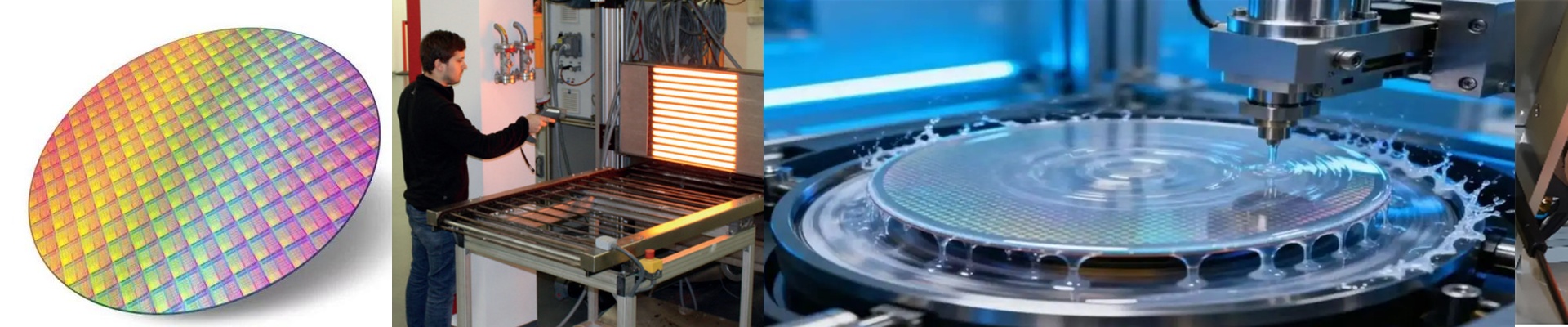
We built the die attach curing system around ±0.1°C temperature uniformity across the substrate, wrapped in a cleanroom-native package rated for Class 1–100. The heating module runs on short-wave infrared with closed-loop pyrometry, so the setpoint is measured at the surface—not guessed from a chamber sensor. Particle generation stays below 1 particle/ft³ at 0.1 μm, and the airflow paths are laid out to avoid turbulence that can disturb the adhesive meniscus. Repeatability is spec’d at ≤0.2% deviation across 10,000 cycles, because in semiconductor work, drift is not an option.
Why this works for die attach
Die attach adhesives cure in tight thermal windows. Too cool, and the bondline stays under-crosslinked. Too hot, and outgassing fouls the bond pad. Our system locks down the full thermal profile—ramp, soak, cool—so you land inside the adhesive vendor’s window, every time. That means fewer reworks, consistent pull strength, and a curing step that doesn’t become the bottleneck. Energy draw drops by 20–30% compared to convection ovens, and cycle times shrink because the thermal mass is low and the control response is quick.
What to plan for up front
This platform is built to integrate into automated backend lines, but it needs a clean power feed with low line noise and a dedicated exhaust path to keep particle performance where it should be. It’s not a straight drop-in for legacy hotplates unless your carrier handling and exhaust interfaces line up. Plan the retrofit around your existing MES recipe mapping, and validate with your specific adhesive formulation—peak exotherm behavior varies by chemistry.