
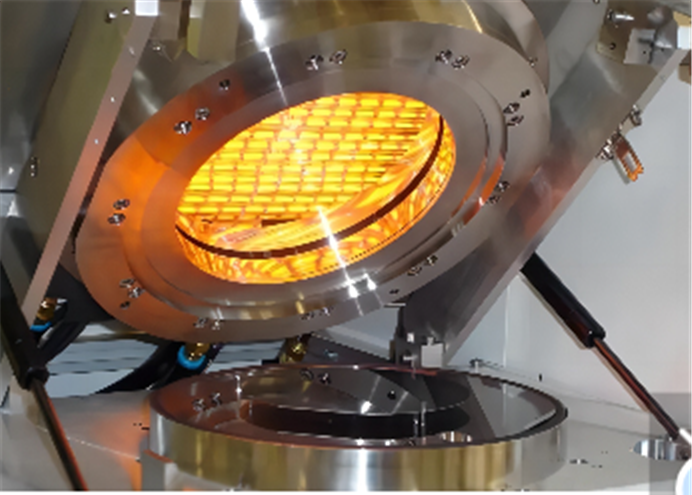
IR Heating vs. Forced Air: Which Way to Heat Your Wafers?
Switching from hot air to infrared (IR) heating isn’t just about swapping out a part. It’s a total shift in how you get energy onto that substrate. Think about forced air for a second. You’re relying on convection, which basically means the air has to do all the heavy lifting to warm up the wafer surface. It works, but it’s slow. IR is different. It uses radiant energy to hit the wafer directly.
The clock is ticking
Here’s the thing: air is a terrible conductor of heat. When you’re using a convection oven, you’re stuck with that annoying “ramp-up lag” while the entire chamber tries to hit the right temperature. It feels like waiting for a giant pot of water to boil. IR lamps just skip the middleman. The energy moves at the speed of light and hits the surface instantly. In the world of semiconductors, that turns a heating cycle that used to take minutes into something that takes seconds. It’s fast. Really fast. And that matters because it keeps your wafers out of the “danger zone”—that awkward window of time where you’re just praying you don’t get unwanted chemical reactions or oxidation on the surface.
Getting the temperature just right
We use precision IR sensors to keep everything in check. Air circulation can be moody. You get turbulence or “cold spots” across a 300mm wafer that are a nightmare to deal with. But with IR arrays, you can actually zone the heat. If the edges of the wafer are losing heat too quickly, you just pump more power into those specific spots to balance it out. This keeps the wafer from warping. When your PID loop is dialed in, you can hold a tolerance of ±1°C across the whole surface. It’s a level of control that feels almost surgical.
The catch
Now, it’s not all sunshine and rainbows. IR puts a lot more stress on your cooling gear. Those high-density lamps put out a massive amount of heat. If your chassis isn’t built to handle that radiant load, you’re going to run into trouble—burnt-out sensors or warped mounting brackets are a real possibility. You’ll need a serious heat sink or some active cooling to protect the parts you aren’t trying to heat. Basically, you’re trading away air-handling volume for tighter electrical control and a much faster workflow. For most of us, that’s a trade we’re happy to make.