


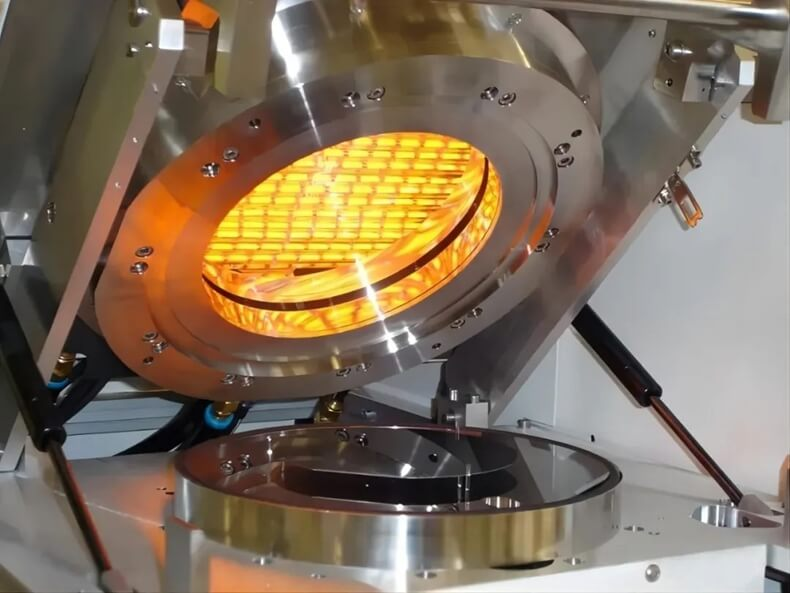
Stop Fighting Ozone in Your Fab
If you’ve spent any time in a semiconductor cleanroom, you know the drill. You need precise heat, so you use shortwave IR lamps. But there’s a catch. Those lamps often spit out vacuum ultraviolet (VUV) radiation, which turns the oxygen in your air into ozone. And ozone is a nightmare. It eats away at organic materials and forces you to run those massive, power-hungry scrubbing systems just to keep the air breathable and the wafers clean. It’s a constant battle. We figured out a better way: IR lamps that simply don’t make ozone. How it actually works Here’s the thing. Standard quartz lamps let out wavelengths below 200nm. Those photons smash into $\text{O}_2$ molecules and create ozone. To stop that, we use a special UV-blocking coating or doped quartz. Think of it like a filter. It blocks the VUV spectrum but lets the heat-carrying IR wavelengths fly right through. You get all the thermal punch you need, but none of the chemical mess. Getting it into your line We built these to be drop-in replacements. If you’ve already got curing or baking ovens, you can usually just swap the lamps and hook them up to your existing controllers. But a quick heads-up on the power side: these are high-density lamps. They ramp up fast—which is great for your cycle times—but they pull a lot of juice. Just make sure your electrical panels can handle the peak current. You don’t want to be the person who trips the breakers in the middle of a run. The “Green” Part The real win here isn’t just about the chemistry; it’s about the power bill. When you stop producing ozone, you can turn off those energy-intensive extraction fans. That’s a huge amount of kilowatt-hours you aren’t wasting on air purification. It’s a simple swap that actually lowers your carbon footprint per wafer. Your factory gets cleaner, your energy costs go down, and you don’t have to slow down your throughput to make it happen. That’s a win across the board.