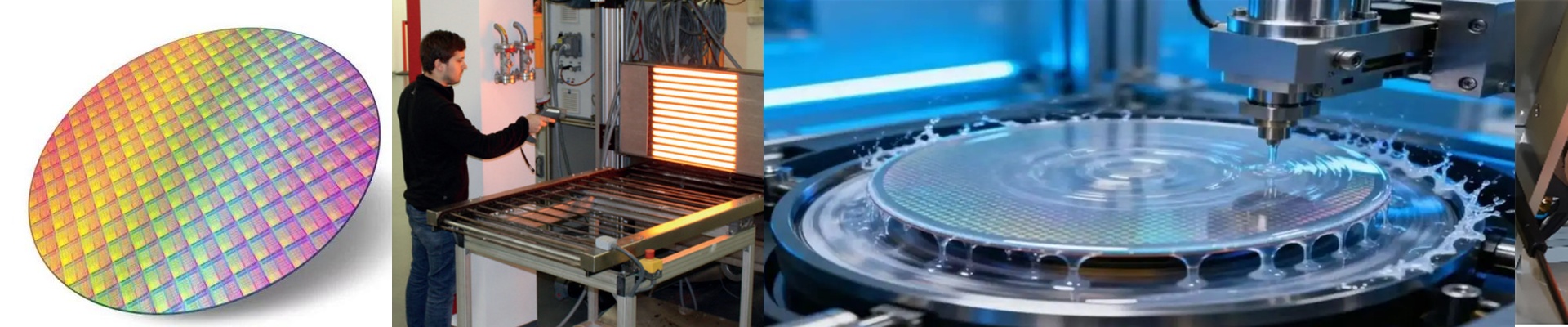


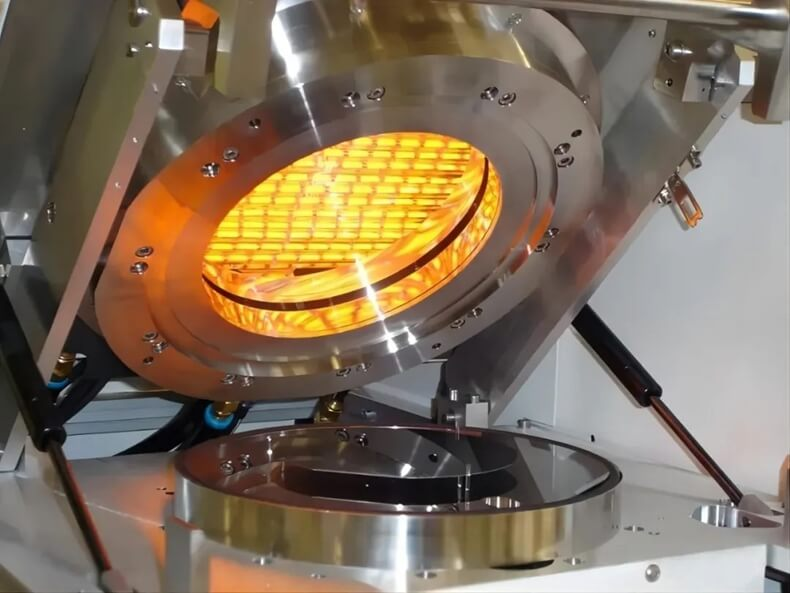
On the 300mm line, ashing isn’t just a “burn-off.” It’s managing a tight thermal budget. Leftover photoresist residue after strip can ghost into the next lithography layer, and if heating isn’t uniform, you risk thermal runaway that will eat your yield. We built our infrared ashing modules to live in that reality. What matters, technically Infrared gives you fast, contactless energy that scales with absorption, not with bulk temperature. Our short-wave infrared emitters, paired with a quartz-enhanced thermal design, hold wafer-level uniformity within ±0.1°C across the full process window. The system keeps that stability at the setpoints you actually use for photoresist stripping, with repeatability tight enough to keep critical dimension control intact. Cleanroom compatibility isn’t an afterthought. We use low-outgas materials, sealed junctions, and a particle-controlled path so particle counts stay within Class 1–100 expectations. The payoff is predictable strip profiles, consistent removal rates, and minimal thermal stress on the underlying films. Why it works on the floor In ashing, time is yield. Fast ramp-up shortens cycle time, but only if temperature control doesn’t drift. Infrared heating hits the resist directly, so the chamber and carrier stay cooler and thermal cross-talk drops. That means fewer excursions, less scrap, and throughput that holds steady shift after shift. Energy use drops because the energy goes where it’s needed—on the wafer—not into heating fixtures. Reliability comes down to uptime: the modules run 24/7 with scheduled maintenance windows, and output stays within spec across thousands of wafers. What you need to know Infrared ashing is sensitive to emitter-to-wafer distance and to emissivity differences across film stacks. Installation has to lock in a fixed gap, and you need a calibration recipe matched to your stack. Expect a short commissioning period to nail the setpoints and confirm uniformity across lots. Once calibrated, the process is solid—but treat it like a controlled parameter, not a one-size-fits-all default.